One of the surprises of slow travel is discovering that things which look familiar… can taste completely different.
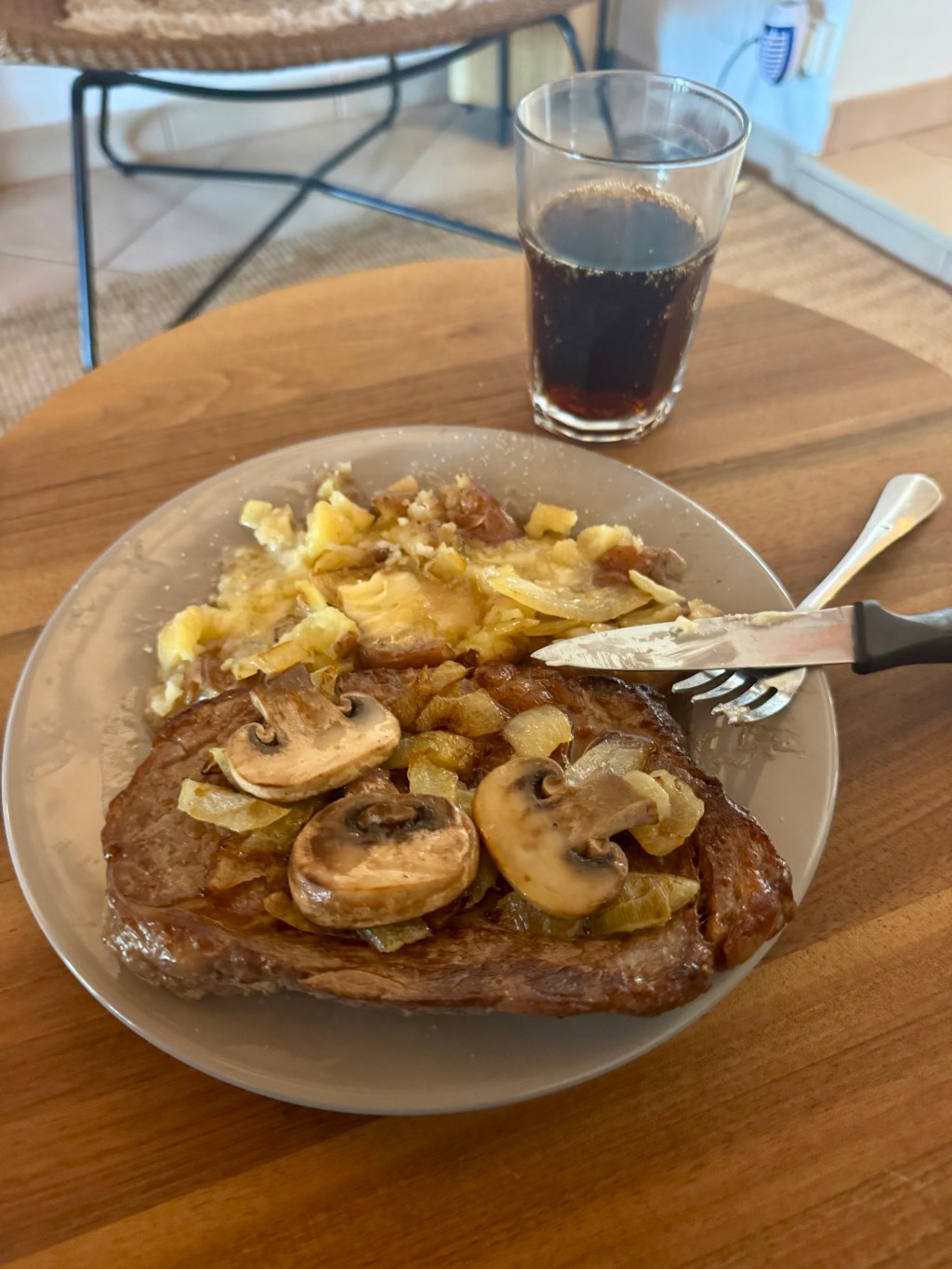
During our first week in Portugal, we cooked a simple dinner at home. Nothing fancy. Just a steak, some mushrooms, and a few potatoes we picked up at the local grocery store in Tavira.
The moment we started eating, we looked at each other.
Something was… different.
The steak tasted different. Not bad—just different. I struggled to describe it. Beefier? More… cow-like? Is that a word people use to describe steak?
And the mushrooms? Wow. They were mushroomy. Deep, earthy, unmistakably mushroom. T loved them. I politely endured them. (I’ve never been a big mushroom guy. To me they’ve always been a suspicious vegetable that pretends to be meat.)
Then there were the potatoes.
Even the potatoes tasted different. More potatoey. More earthy. Almost… potato-forward. If potatoes had a personality, these ones were not shy about introducing themselves.
At this point we started to worry.
Did we leave the beef in the refrigerator too long?
Did it get warm on the drive home?
Was this what almost-bad steak tastes like?
Here’s the confusing part: the steak was incredibly tender. Melt-in-your-mouth tender. Not the texture of something that had gone wrong… but something that had gone very right.
Naturally, I did what any confused retiree with Wi-Fi would do.
I researched steak.
Turns out, the steak wasn’t old. It wasn’t spoiled. And it definitely wasn’t bad.
It was just… Portuguese.
Much of the beef Americans buy in grocery stores comes from grain-fed cattle and is typically wet-aged longer to create the flavor profile many of us grew up with. In Portugal, the cattle are commonly grass-fed, the aging process is shorter, and the meat is generally sold with far fewer preservatives.
The result? A steak that tastes a lot more like… actual beef.
It caught us off guard—but in a good way.
And here’s the part that surprised me the most.
It was cheaper than the regular grocery store steak I used to buy back home.
Not a fancy butcher shop cut. Just the everyday steak I’d grab from the supermarket chain near my house. Somehow the Portuguese version was more tender, more flavorful… and less expensive.
That’s one of the reasons we’re slow-traveling through Europe right now—looking for a place to eventually settle. We expected differences like this.
But it’s still surprising when they show up on your dinner plate.
Travel writers always say the food in Europe is incredible. After just one week, we’re starting to understand why.
In the U.S., we’ve spent decades prioritizing convenience and consistency. Our food producers have done an amazing job delivering exactly that—at massive scale. But meeting that demand requires small adjustments along the way.
A little efficiency here. A small tweak there.
Over time, those tiny compromises add up.
And sometimes it takes cooking a simple steak and potatoes in another country to realize just how different food can taste when the system behind it changes.
So… Retirement Lesson #13:
Sometimes the steak doesn’t taste wrong.
It just has an accent.

 Two Suitcases and a Story
Leave a comment